This is default featured post 1 title

Go to Blogger edit html and find these sentences.Now replace these sentences with your own descriptions.This theme is Bloggerized by Lasantha Bandara - Premiumbloggertemplates.com.

This is default featured post 2 title

Go to Blogger edit html and find these sentences.Now replace these sentences with your own descriptions.This theme is Bloggerized by Lasantha Bandara - Premiumbloggertemplates.com.

This is default featured post 3 title

Go to Blogger edit html and find these sentences.Now replace these sentences with your own descriptions.This theme is Bloggerized by Lasantha Bandara - Premiumbloggertemplates.com.

This is default featured post 4 title

Go to Blogger edit html and find these sentences.Now replace these sentences with your own descriptions.This theme is Bloggerized by Lasantha Bandara - Premiumbloggertemplates.com.

This is default featured post 5 title

Go to Blogger edit html and find these sentences.Now replace these sentences with your own descriptions.This theme is Bloggerized by Lasantha Bandara - Premiumbloggertemplates.com.

Showing posts with label World Tour. Show all posts

Sunday, July 26, 2009

Beautiful cities in the world - 1

Sydney

Geneva

Frankfurt

Liverpool

Monaco

Tempe Town Lake

Avila

London

Thursday, July 23, 2009

Oldest cities in the world

Urban society may seem a modern phenomenon but cities have been around for a lot longer than one might think. Indeed, once nomadic tribes began to settle in one location, they saw that it was good, became fruitful, and multiplied. Decades, centuries and millennia passed while war, climate change and human migration all took their toll. Relatively few ancient cities have managed to survive the test of time. Here are 10 that have not only survived, but continue to thrive.

Jericho, West Bank


Susa, Iran


Plovdiv, Bulgaria


Jerusalem


Athens, Greece


Tyre, Lebanon


Lisbon, Portugal


Cholula, Mexico

Monday, July 20, 2009

Ten Largest Cities in the world

1. Tokyo


2. Seoul


3. Mexico City


4. Delhi


5. Mumbai (Bombay)


6. New York


7. Sao Paulo


8. Manila


9. Los Angeles


10. Shanghai

Friday, July 17, 2009

Top 10 coolest place in the world

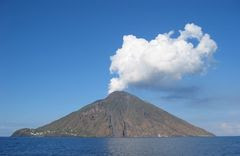
1. Stromboli, Italy

I thought Stromboli was an Italian food similar to a calzone. It took a book to enlighten me to the error. Stromboli is a very active volcanic island in the Tyrrhenian Sea. The thing is, people live on it. Imagine falling asleep to the gentle hum of liquid magma pouring out of the crater a few hundred feet from your house. Need to relax? Head to the Sciara del Fuoco, and watch as car-size molten boulders crash into the sea.

2. Seychelles

I had a teacher in high school tell me the most beautiful place on Earth was a tiny archipelago nation called the Seychelles. I’d never heard of it. It took the development of the internet (yes, I’m that old) to read about such a place. And since then, I’ve been dreaming about it ever since. White sand beaches. Crystal blue water. Warm ocean breezes. This is paradise defined. Of course, getting there is nothing short of being obscenely expensive. So, if you’d like to fund my trip, please e-mail the YesButNoButYes and put “Funding Echowood’s Trip” in the subject line.

3. Meteora, Greece

Sandstone pinnacles rising hundreds of feet straight into the air, capped off by 16th century Greek Orthadox monasteries? Is that something you might be looking for? Such a place exists, and it’s called Meteora. (Not to be confused with the Linkin Park album, which as far as I’m aware, has nothing to do with monasteries or sandstone … or Greece.)

4. Devil’s Hopyard, United States

The Devil’s Hopyard may not be as outstanding as Santorini, or Palau, but the legends it’s created are pretty interesting. (Cue Puritanical mythology via Curbstone) Of all the places in Connecticut bearing the Devil’s name, the one with the greatest variety of legendary etymologies is the 860-acre state park in East Haddam known as the Devil’s Hopyard. Here, the combination of booming Chapman’s Falls, pothole-scarred rocks, the unearthly quiet in the dark glen below the falls and the steep, cave-pocked cliffs flanking turbulent Eight Mile River makes a likely setting for the growth and development of legends. Then, too, the “hellish” appearance of the Hopyard’s gorge was probably enhanced for the early English settlers by local Indian tribes, which are said to have used Devil’s Hopyard for religious rites and powwows.

5. Palau

Take a long look at that picture and tell me you wouldn’t want to be there right now. Aside from a season of Survivor, Palau remains mostly paradise on Earth. There’s an interesting phenomenon in Palau known as Jellyfish Lake. The lake, once open to the ocean, closed up allowing for an amazing reproduction of Jellyfish. On the flip side, the lake has a layer of hydrogen sulfide beneath the surface which, after coming into contact with, would make someone’s day pretty horrible.

6. Santorini, Greece

Here’s an idea, let’s build a village on the edge of partially submerged extinct volcano. While we’re at it, let’s make it absolutely beautiful. Santorini is an island off the coast of Greece (part of the Cyclades), and it’s quickly becoming one of Europe’s hot spots. A giant central lagoon, more or less rectangular, and measuring about 12 km by 7 km (8 mi by 4 mi), is surrounded by 300 m (984 ft) high steep cliffs on three sides. The island slopes downward from the cliffs to the surrounding Aegean Sea. On the fourth side, the lagoon is separated from the sea by another much smaller island called Therasia; the lagoon merges with the sea in two places, in the northwest and southwest. The water in the center of the lagoon is nearly 400 m (1300 ft) deep, thus making it a safe harbor for all kinds of shipping. The island’s harbors all lie in the lagoon and there are no ports on the outer perimeter of the island.

7. Iguaçu Falls, Brazil/Argentina

Niagara Falls has nothing on Iguaçu Falls. The waterfall system consists of 275 falls along 2.7 kilometres (1.67 miles) of the Iguaçu River. Most of the falls are about 210 feet in height, and the average water falling over Iguaçu in peak flow has a surface area of about 40 ha (1.3 million ft²). The falls were also featured in Indiana Jones and the Kingdom of the Crystal Skull.

8. Oak Island, Canada

This is one of those things you hope is true. While not necessarily an amazing landscape, the story and legends of Oak Island bring out the Goonies in all of us. The long and the short of it is, there may or may not be a horde of pirate treasure buried in a pit on the island. (Some say the Holy Grail could be buried there too.) What we do know is over 200 years ago, some children found a depression on the island, started digging, and found a layer of flagstone a few feet down. Excavation continued with more discoveries of logs, charcoal, and coconut fiber, all placed there, seemingly, by humans.

9. The Giant’s Causeway, Northern Ireland

Have a thing for hexagons? How about basalt hexagonal columns? There’s no better place to find such a rarity than at the Giant’s Causeway.
Folklore has it that the Irish giant Fionn mac Cumhaill (Finn McCool) built the causeway to walk to Scotland to fight his Scottish counterpart, Benandonner. The more accurate, but less fun story behind the causeway states that during the Paleogene period, the region was subject to intense volcanic activity, when highly fluid molten basalt intruded through chalk beds to form an extensive lava plateau. As the lava cooled rapidly, contraction occurred. While contraction in the vertical direction reduced the flow thickness (without fracturing), horizontal contraction could only be accommodated by cracking throughout the flow.

10. Ngorongoro Crater, Tanzania

The Ngorongoro Crater is the world’s largest unbroken, unflooded volcanic caldera and the closest you may come to the Garden of Eden. What’s more, and because of its naturally occurring borders, it houses an amazing array of plant and animal life. There is even speculation that life on Earth originated from the extinct volcano. There are lodges and safaris touring the crater, and if you can get your hands on a ticket to East Africa, I’m sure you’ll find your money well spent.

Wednesday, July 15, 2009

The world’s largest cave in Vietnamese jungle


Its amazing that there are still places like this still out there waiting to be explored. A British caving team have just recently explored the world’s largest cave passage in the heart of the Vietnamese jungle.

Called Hang Son Doong (Mountain River Cave) it is believed to be almost twice the size of the current record holder. Son Doong has replaced the Deer cave in Malaysia to become the world’s largest cave.

‘It is a truly amazing sized cave and one of the most significant discoveries by a British caving team,’ said Adam Spillane, a member of the 13-man expedition team.

Using a laser measuring device known as the LaserRace 300, which measures height and width, the team are now back in the UK analysing their readings.


The cave was originally discovered in 1991 by a Vietnamese Jungle man called Ho Khanh. However Mr Spillane said no-one had entered if before because: ‘it emitted a frightful wind and noise which was due to a large underground river.’

They spent five days exploring the cave in Vietnam’s Phong Nha-Ke Bang National Park through mid-April.

‘The cave is 6.5km long at present but the end of the main passage still continues with a calcite wall of over 45m high halting our progress.

‘More work on the next expedition is required to make a complete exploration of Hang Son Doong and obtain a complete photographic record of the cave. ’
The Hang Son Doong cave is believed to be almost twice the size of the current record holder.

Monday, July 13, 2009

Walled City Kowloon in Hong Kong

Sunlight comes only rarely, with a sliver slicing down between the ramshackle towers. The light here is fluorescent and the people packed sardine tight amongst twisting corridors. Some of the lower levels are widely considered uninhabitable due to trash. Up the street (if it can be called that) there’s a drug parlor with an unlicensed “doctor” open for business upstairs. They exist openly: there are no police because there is no law.The above is not a description of a dystopian (or utopian) fantasia, but of the Kowloon Walled City which was very real. From 1945-1993, a political loophole created a zone of Hong Kong where there was no law. The resulting anarchic, hodge-podge monolith was the descendant of the pirate utopias of old: a testament to humanity’s ingenuity, greed, violence and tenacity. Here is a glimpse within the walls of one of the strangest human settlements ever.

The story goes like this: it’s 1898 and, at the height of their imperial power, the British have just forced the Chinese to sign away the Kowloon Peninsula for the next 99 years. There is one exception, however, as the British agree to let a small magistrate’s fort remain until they set up their colonial administration. The Chinese leave, but when the British attack the fort, they find it abandoned. So, like any good colonial bureaucrat, they scratch their heads before promptly turning it into a tourist attraction and ignore its murky legal status.Along comes World War II, and the Japanese, after taking Hong Kong, tear down the walls to build an airport. After the war, squatters flock to the area and begin to build. Attempts to evict them end, twice, end in riots that threaten to cause a diplomatic incident. The British go back to ignoring the place. The population grows exponentially, and by 1971 there are 10,000 people living on seven acres. It attracts the usual types drawn to undiscovered countries: criminals, dreamers, dissidents, refugees and the plain desperate.

But even as the buildings practically merge into one monolithic labyrinth, people manage to build a life in the Walled City. The communities work out basic rules to prevent fires, sink over 70 wells or tap into city supplies to get water (Hong Kong ends up providing it), set height limits on the buildings to prevent trouble with the nearby airport and establish volunteer groups to keep some basic order.But this is still a lawless place. Driven from mainland China, the Triads set up shop and start living like kings, while Hong Kong’s upper crust comes in for the sex, drugs and gambling. The gangsters end up lording it over the inhabitants until 3,000 raids by the Hong Kong police in the 1970s clear most of them out (though it leaves the city ungoverned as ever).

After the Triad recedes, the city thrives, the population multiplies to 35,000 (making it one of the most densely populated places on the planet), and by most accounts, the violent crime rate is lower than similar neighborhoods in the rest of the city. Doctors and entrepreneurs who can’t afford the licenses in Hong Kong set up shop and make a fortune.But, thing change as the handover to China approaches. Neither country’s government particularly likes the filthy uncontrolled pocket that their nearly century long dispute has created. An agreement is made, the residents are moved out and, in 1993 the whole staggering structure is demolished. Today, it’s a park.

But the Walled City left its mark, vexing the Muscles from Brussels in Bloodsport, inspiring Christopher Nolan’s depiction of Gotham’s slums and is rebuilt in cyberspace in William Gibson’s Bridge Trilogy.Every observer seems to have taken a different lesson. Some extolled it as the “rarest of things, a working model of an anarchist society,” while U.S. News and World Report (never big on the whole nonconformity thing in the first place), sputtering in its disgust, dubbed it “a fetid conglomeration” of tenements, piling on words like “festering” for good measure.

I think any lessons the place offers defy easy categories. But because it’s closer in history, it should be a reminder, whenever any of us looks back on the aforementioned pirate utopias, or the romanticized depictions of Tortuga or the Wild West, that those no-rules fantasy lands were real places with all the attendant blood and stink.